India's wholesale price inflation (WPI) increased to 9.87 per cent in June, up from 9.68 per cent in May, primarily due to significant price increases in non-food and food products, with food inflation alone rising to 5.49 per cent.

Pakistan's government is exploring measures, including potential smart lockdowns and austerity, to reduce petroleum consumption. This comes after recent fuel price hikes driven by rising global oil prices and West Asia tensions, which have also raised concerns about oil supply disruptions. The government is also implementing a fuel relief scheme and faces public pressure over the price increases.
Global oil prices fell on Thursday to their lowest levels since before the outbreak of the Iran conflict, offering a significant economic tailwind for India, the world's third-largest crude importer, by easing inflation risks, reducing the import bill and improving the government's fiscal position.

Pakistan has significantly increased the price of high-octane fuel, impacting luxury vehicle owners, while also seeing increases in petrol, diesel, and airline fares due to rising global oil prices.

The government has sharply reduced excise duty on petrol to 3 and diesel to zero, offering major relief to consumers. Here's how the price cut will impact fuel rates and inflation.
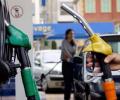
This is the second straight increase in ATF price this month. Rates were hiked by a record 56.5 per cent (Rs 12,126.75 per kl) on June 1. Simultaneously, petrol and diesel prices were hiked for the 10th day in a row.

A litre of petrol in Delhi will cost Rs 57.31 from Monday.

Indian benchmark equity indices, Sensex and Nifty, closed lower due to investor caution over rising bond yields, a weaker rupee, and fresh fuel price hikes, which have revived inflation concerns.
International oil prices surged close to $100 a barrel on Tuesday after Russian President Vladimir Putin sent troops into Ukraine, but petrol and diesel prices in India continue to be on freeze and are expected to rise once assembly elections in states like Uttar Pradesh end. Amid fears of supplies being disrupted because of Russian aggression, the price of futures contract for Brent crude oil with April delivery on London's ICE rose by 4.18 per cent to $99.38 per barrel on Tuesday morning, before paring some gains to settle just above $98. The last time Brent exceeded $99 per barrel was in September 2014. Russia makes up for a third of Europe's natural gas and about 10 per cent of global oil production.

High gold imports had contributed to high CAD which stood at 5.4 per cent in the second half of 2012-13 and was creating pressure on the rupee.
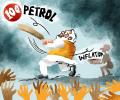
Petrol and diesel prices were on Wednesday hiked by 80 paise a litre each, taking the total increase in rates in the last nine days to Rs 5.60 per litre. Petrol in Delhi will now cost Rs 101.01 per litre as against Rs 100.21 previously while diesel rates have gone up from Rs 91.47 per litre to Rs 92.27 according to a price notification of state fuel retailers. Rates have been increased across the country and vary from state to state depending upon the incidence of local taxation.
The Indian government has reduced excise duty on petrol and diesel to mitigate the impact of rising global crude prices, triggered by geopolitical tensions in the Middle East. This move aims to provide relief to consumers and oil companies amidst volatile international oil markets.

With the losses incurred by oil marketing companies (OMC's) on selling regulated fuels below their market prices (under-recoveries) reaching alarming levels, an urgent corrective action, like hiking the price of diesel, has become imperative, says a Crisil study.
Over the past two decades, India has witnessed several major petrol price hikes, driven by global crude oil fluctuations, economic crises, currency depreciation and geopolitical conflicts. How did we get from Rs 34 to over Rs 100 today

The ongoing US conflict with Iran has cost the Trump administration an estimated $45.1 billion, according to a Pentagon estimate provided to the US Congress on Friday, CNN reported, citing two sources familiar with the matter.
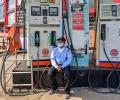
Petrol and diesel prices across the country soared to all-time high levels on Thursday as rates were hiked again in line with the spurt in international oil prices. Petrol price was increased by 30 paise per litre and diesel by 35 paise a litre, according to a price notification of state-owned fuel retailers. The price of petrol in Delhi rose to its highest-ever level of Rs 103.24 a litre and to Rs 109.25 per litre in Mumbai, the notification showed.

Petrol and diesel prices on Friday rallied to their highest ever levels across the country, as fuel rates were hiked again by 35 paise a litre. The price of petrol in Delhi rose to its highest-ever level of Rs 105.14 a litre and Rs 111.09 per litre in Mumbai, according to a price notification of state-owned fuel retailers. In Mumbai, diesel now comes for Rs 101.78 a litre; while in Delhi, it costs Rs 93.87.
The new prices are effective from Sunday midnight.

Aviation fuel prices for domestic airlines remain unchanged, providing stability for local carriers, while commercial LPG and 5-kg cylinders see a significant rate hike due to rising international energy costs.

Petrol pump dealers seek exemption from the proposed 5 UPI charge on fuel purchases above 2,000, citing pressure on their margins.
Diesel price hike is a tough decision and we need lot of tough decisions to get to 8 per cent growth rate," Planning Commission Deputy Chairman Montek Singh told reporters.

India has significantly reduced Aviation Turbine Fuel (ATF) prices for international airlines by 27% due to easing global fuel benchmarks, while simultaneously increasing commercial LPG and 5-kg cylinder prices to record highs.

The government on Monday said it would not free diesel prices from its control in hurry as the move would lead to sharp rise in price of fuel most used in the transport sector.
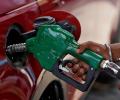
State-owned Indian Oil Corp (IOC) on Friday said international oil prices have been range-bound in the last few weeks, warranting no revision in retail petrol and diesel rates. While petrol price hasn't changed since September 22, diesel rates have been static from October 2.
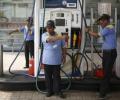
Petrol and diesel prices were on Monday hiked by 40 paise a litre each, taking the total increase in rates in the last two weeks to Rs 8.40 per litre. Petrol in Delhi will now cost Rs 103.81 per litre as against Rs 103.41 previously, while diesel rates have gone up from Rs 94.67 per litre to Rs 95.07, according to a price notification of state fuel retailers.

India possesses two months of fuel stockpiles and faces no supply concerns despite global energy disruptions, according to Oil Minister Hardeep Singh Puri. However, state-run fuel retailers are incurring losses of up to Rs 1 lakh crore in a single quarter due to elevated crude prices and unchanged retail fuel prices, raising questions about the sustainability of these losses.

India is set to launch Bharat Vecto, its first certification tool for assessing the fuel efficiency and CO2 emissions of medium and heavy commercial vehicles, by December, with a full launch targeted for the Bharat Mobility Global Expo in February 2027.

Despite international crude oil rates crossing USD 100 per barrel due to Middle East tensions, the Indian government plans to maintain current petrol and diesel prices, ensuring uninterrupted fuel supply across the country.

Petrol and diesel prices were hiked by 80 paise a litre each on Saturday, the fourth increase in five days as oil firms passed on to consumers the spike in cost of raw material. Petrol in Delhi will now cost Rs 98.61 per litre as against Rs 97.81 previously while diesel rates have gone up from Rs 89.07 per litre to Rs 89.87, according to a price notification of state fuel retailers. All the four increases since the ending of a four-and-half-month long hiatus in rate revision on March 22, have been of 80 paise a litre.
Allies and opposition parties tonight attacked the government over the hike in diesel prices saying it will further hit the common man and demanded an immediate rollback.

Tata Motors has launched the Curvv Series X, an updated version of its coupe-SUV, focusing on enhancing value-for-money by adding more features to lower and mid-spec variants and streamlining the lineup, with prices ranging from Rs 9.99 lakh to Rs 18.99 lakh (ex-showroom).

Former Haryana Chief Minister Bhupinder Singh Hooda has criticised the newly introduced fees on UPI payments, stating they will lead to increased inflation for the common man. He dismissed government claims that customers would not be burdened, arguing that merchants would pass on the costs. Hooda demanded the immediate withdrawal of these fees, highlighting that the government's move contradicts its 'Digital India' initiative.
It is high time that petrol and diesel prices were decontrolled taking advantage of low inflation and global crude prices, the Economic Survey said, while criticising the government for its "imperfect" handling of oil price hike.

Public sector oil marketing companies currently lose Rs 11.65 per litre on diesel.
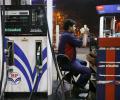
Petrol and diesel prices were hiked by 60 paisa per litre on Monday, for the second day in a row, as State-owned oil firms reverted to daily price revisions after an 83-day hiatus. Petrol price in Delhi was hiked to Rs 72.46 per litre from Rs 71.86 on Sunday, while diesel rates were increased to Rs 70.59 a litre from Rs 69.99, according to a price notification of state oil marketing companies.
Diesel price was on Monday hiked by 50 paise per litre, excluding VAT, with effect from midnight tonight.
The government on Thursday hiked petrol and diesel prices by a marginal Rs 0.27 a litre and Rs 0.15 per litre respectively following increase in the commission paid to petrol pump dealers.
The demand for diesel cars, which account for 58 per cent of passenger vehicle sales in India every month, has seen a steep rise, as manufacturers continue to introduce variants that have diesel engines.

In August, Hyundai recorded its highest ever domestic sales for the month with 54,396 units sold, marking a 23.6 per cent Y-o-Y increase. The Creta Electric currently anchors Hyundai's mass-market electric portfolio, while the Ioniq 5 caters to the premium end
Petrol and diesel prices in the national capital have been raised marginally following the state government's decision to levy sales tax on the two auto fuels.
